Start small
It's April 1996. You have a desk in your parents' house in an outer Tokyo ward, ¥300,000 for printing and one very loyal assistant with enormous twintails.

A manga career sim. Tokyo, 1996.
Coming to Steam
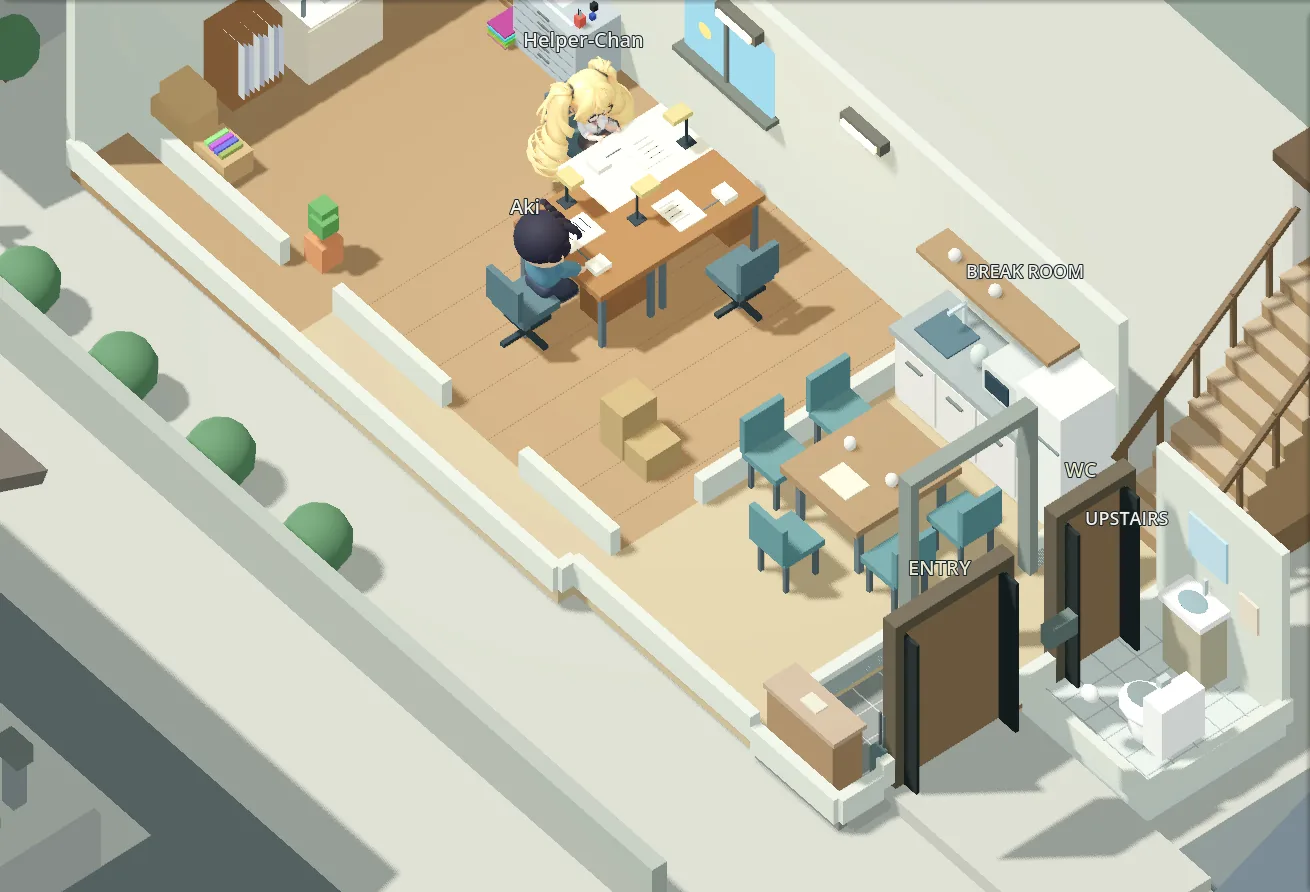
Draw your first doujin in your parents' spare room in 1996 Tokyo. Sell it, pitch it to a magazine, survive the reader survey and hire your first assistant.
A cosy manga career and studio sim where every chapter, deadline and cancellation has real numbers behind it.
Made with help from AI tools for the art, music, Helper-Chan's voice and code. See how we use AI.
It's April 1996. You have a desk in your parents' house in an outer Tokyo ward, ¥300,000 for printing and one very loyal assistant with enormous twintails.
Name, Pencils, Inks, Backgrounds, Tones. A weekly chapter barely fits in a week on your own, and the editor wants to see the Name first.
Get serialized and you're ranked every issue. Slip below the line and the warnings start. Cancellation hurts, but your career carries on.
Hire assistants, move out, incorporate, chase awards and an anime deal, and keep going for decades.
Screenshots, progress updates and news as the game heads to Steam.
Press and business: press@mangakadays.com
Some of Mangaka Days was made with generative AI tools. Here is exactly where.